
JY
JY-1500 Welding Fume Extractors
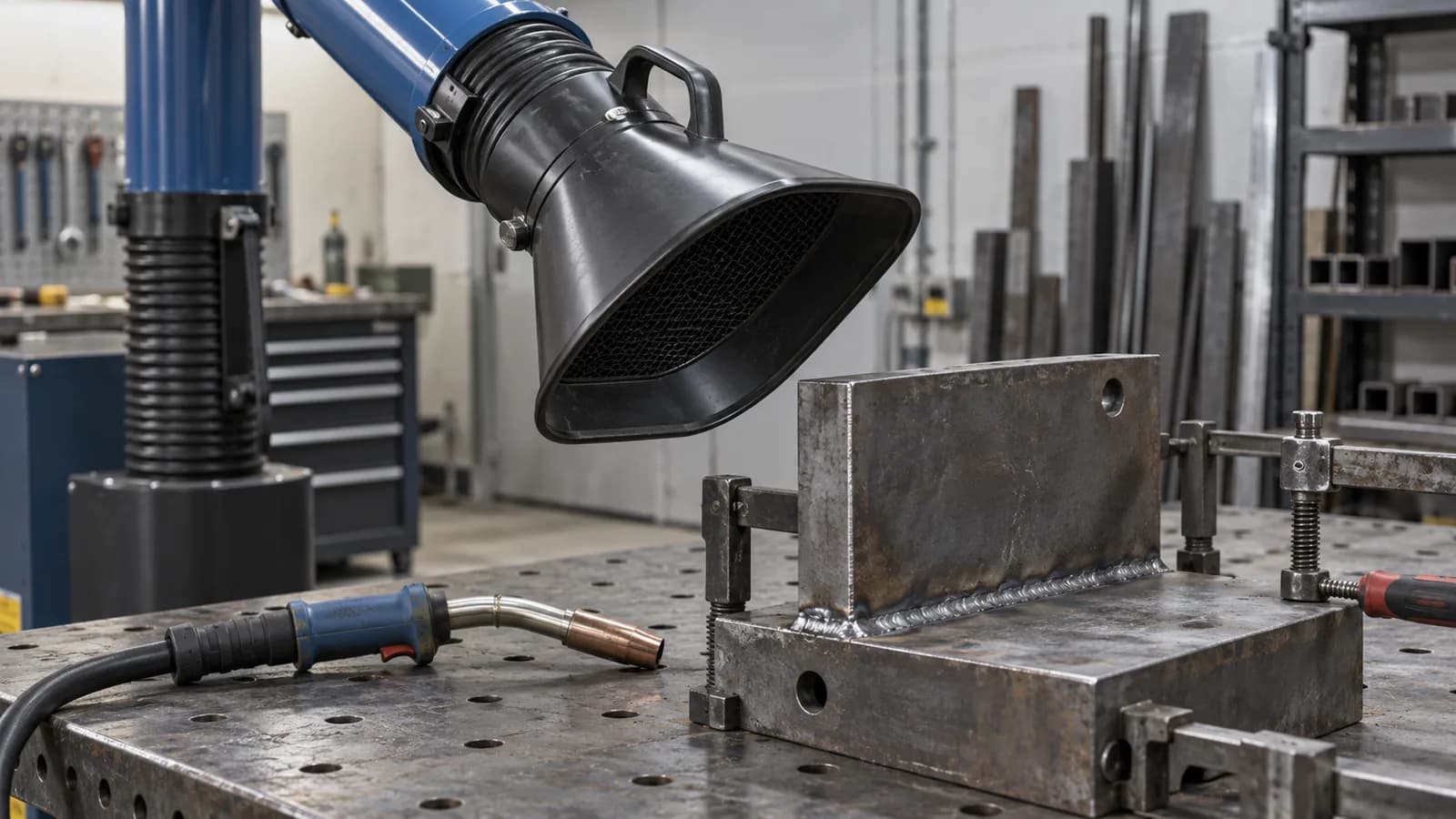
JY-1500 welding fume extractors provide wall-mounted JY-1500G and mobile JY-1500S arrangements for local capture near a welding bench. Both listed versions use a 1.5 kW motor and 220 V supply; mounting and hood position distinguish the selection.
- Model options
- 2
- Compare by
- Capture layout and utilities
Capture point, airflow and filter service
Choose a wall-supported arm where its service area is defined, or assess a mobile cabinet where the work location changes. Obtain the fan curve and hood requirements before sizing capture; the motor rating does not establish the airflow delivered at the weld.
An extraction system must move contaminated air from the emission point through a defined air path. Begin with the welding or grinding process, material and number of simultaneous stations. Hood position and orientation must capture the emission without blocking the operator or robot. Duct length, bends, branches and filter condition change the operating flow, so a nominal collector airflow cannot be assigned directly to each hood. Choose a portable arm, wall arrangement or central collector around the working pattern. Keep welding fume, grinding dust and combustible-dust applications separate when defining the collection and protection system.
Application focus
- Welding fume capture
Specifications and selection notes
This page covers several models. The comparison below assigns each rating to its model; select an individual row before sizing the fixture, drive or installation.
Choose the model and configuration
Each row describes the named variant. Use its values together; parameters from different rows are not a combined specification.
| Model / arrangement | Technical data |
|---|---|
| JY-1500G |
|
| JY-1500S |
|
Define what you need supplied
Local mobile capture
Move the hood with the task and check arm position at each work location.
Fixed/wall capture
Serve a defined bench while reserving arm movement and service access.
Central collection
Size the collector with the duct network and simultaneous branches.
Match the equipment to your installation
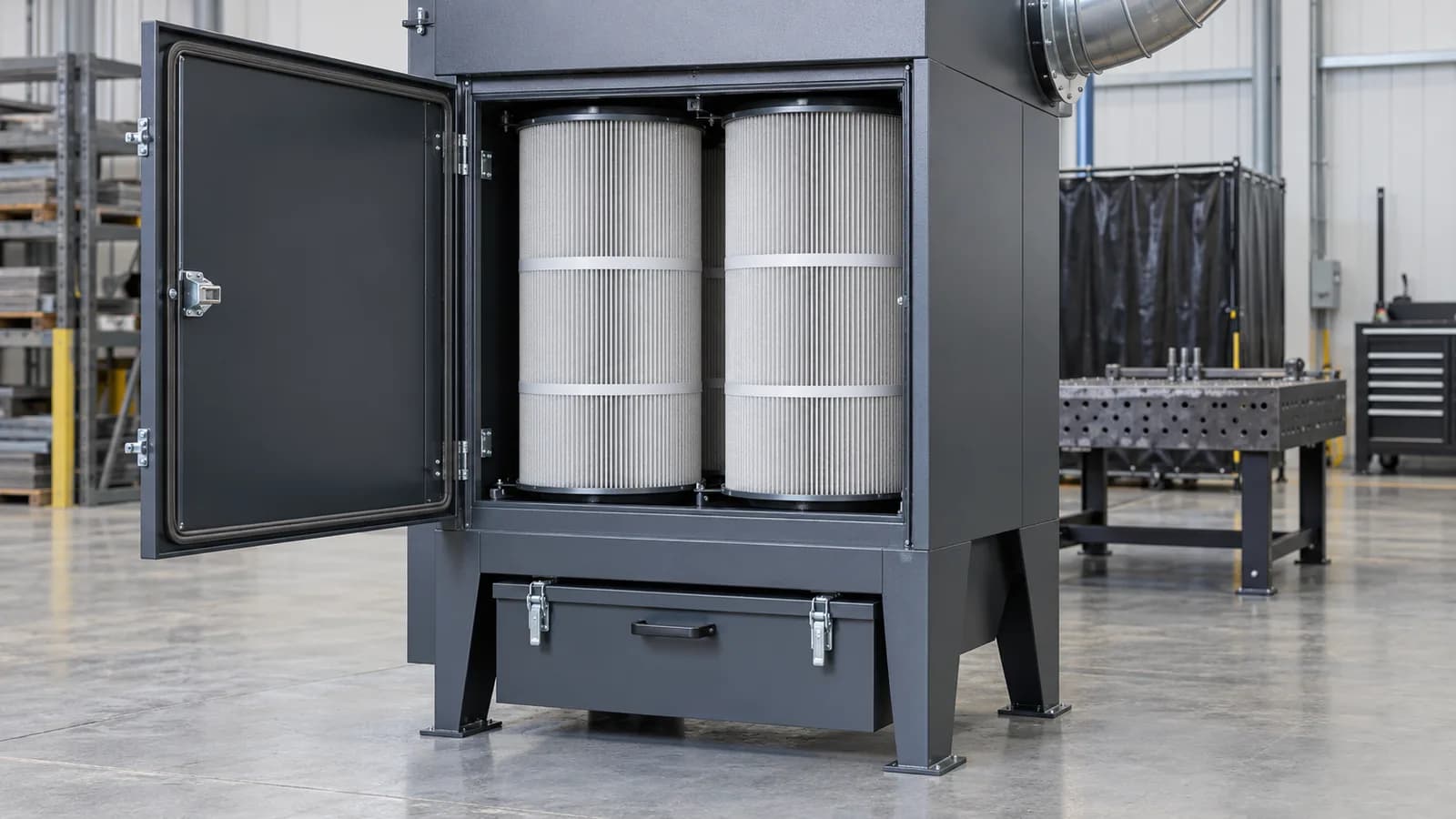
Provide filter-change and waste-bin access, compressed air where specified, electrical isolation and the intended discharge arrangement. Review sparks, hot particles and fire/dust risks for the actual materials. Commission capture under the agreed operating conditions and define who measures workplace exposure. A filtration percentage is not an installed exposure assessment or compliance certificate.
| Selection factor | Information to specify |
|---|---|
| Emission process | Material, consumables, welding/grinding task and simultaneous emission points. |
| Capture arrangement | Hood geometry, position, arm reach and access around the workpiece. |
| Air path | Required operating flow, duct losses, branch use and fan/filter conditions. |
| Maintenance and discharge | Filter replacement, collected material, compressed air and exhaust/recirculation design. |
From the part to the equipment package
- 01Identify the contaminant
- 02Locate capture points
- 03Size ducts and operating flow
- 04Select collector and services
- 05Measure installed capture
Tooling, interfaces and service access
Product and ordering questions
01What are the applications of JY-1500 Welding Fume Extractors?+
JY-1500 welding fume extractors provide wall-mounted JY-1500G and mobile JY-1500S arrangements for local capture near a welding bench. Both listed versions use a 1.5 kW motor and 220 V supply; mounting and hood position distinguish the selection.
02Does collector airflow prove capture at the weld?+
No. Capture depends on the hood, distance, orientation, duct resistance, branch use and filter condition. Use the fan curve and air-path design to select the operating point, then verify the installed capture. Filter efficiency is a separate characteristic and does not establish worker exposure or suitability for combustible dust.
03What should I consider when choosing JY-1500 Welding Fume Extractors?+
Choose a wall-supported arm where its service area is defined, or assess a mobile cabinet where the work location changes. Obtain the fan curve and hood requirements before sizing capture; the motor rating does not establish the airflow delivered at the weld.
04What should the equipment package include?+
Identify the selected equipment and separate the following packages: local mobile capture, fixed/wall capture, central collection. State which accessories, controls, installation, programming and commissioning are included. This makes equipment-only and integrated proposals comparable without assuming identical supply scope.
05How can I request a quotation for JY-1500 Welding Fume Extractors?+
Send the required model or arrangement, quantity and destination, plus material, consumables, welding/grinding task and simultaneous emission points; hood geometry, position, arm reach and access around the workpiece. Add photographs or drawings and identify existing equipment. TubeFrame can then discuss model sourcing, configuration and partner-supported integration as separately defined work packages.
Specify your next equipment package
Send the model or configuration, drawings, quantity and destination. We will discuss equipment sourcing, technical interfaces and any integration work required for your application.